
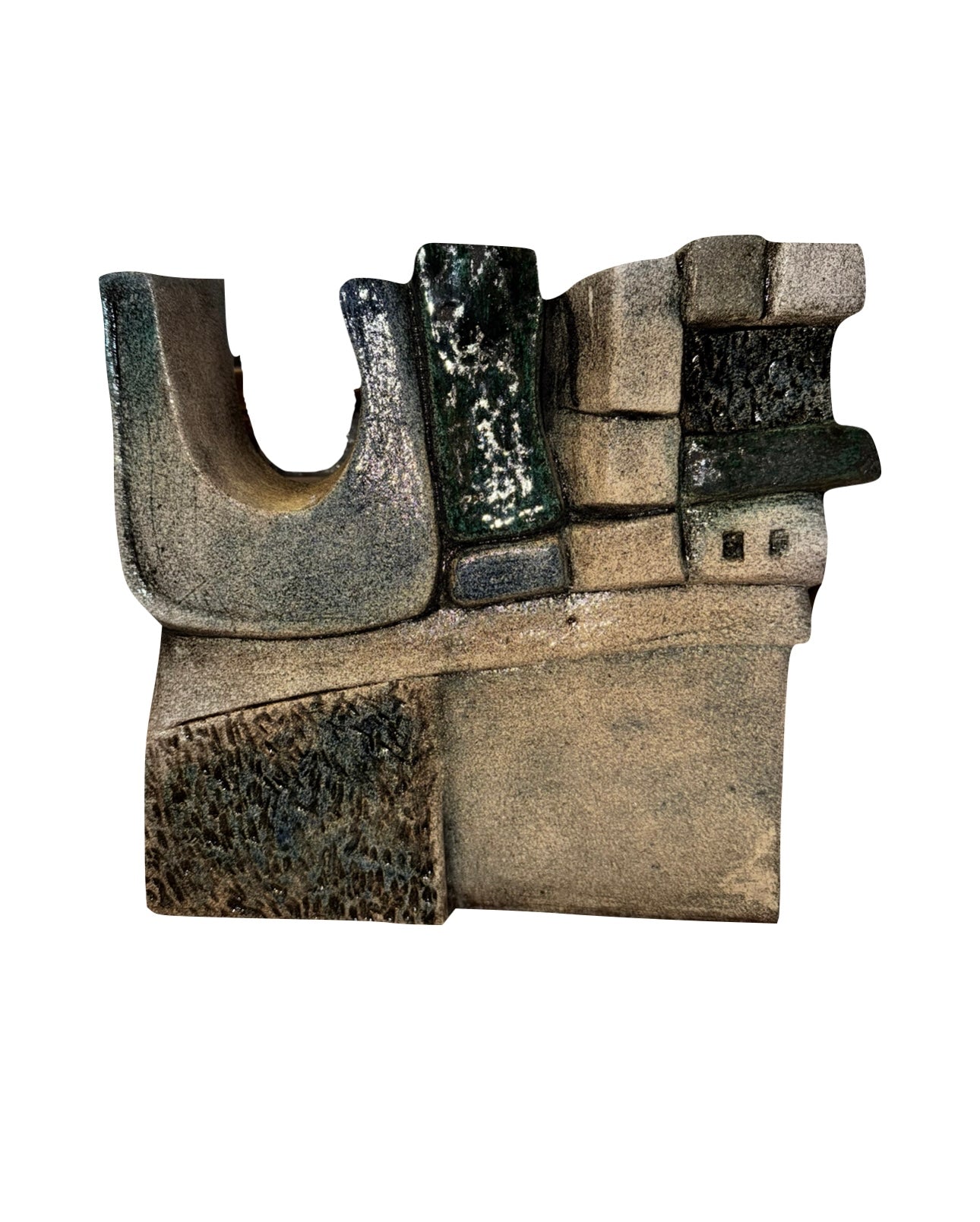

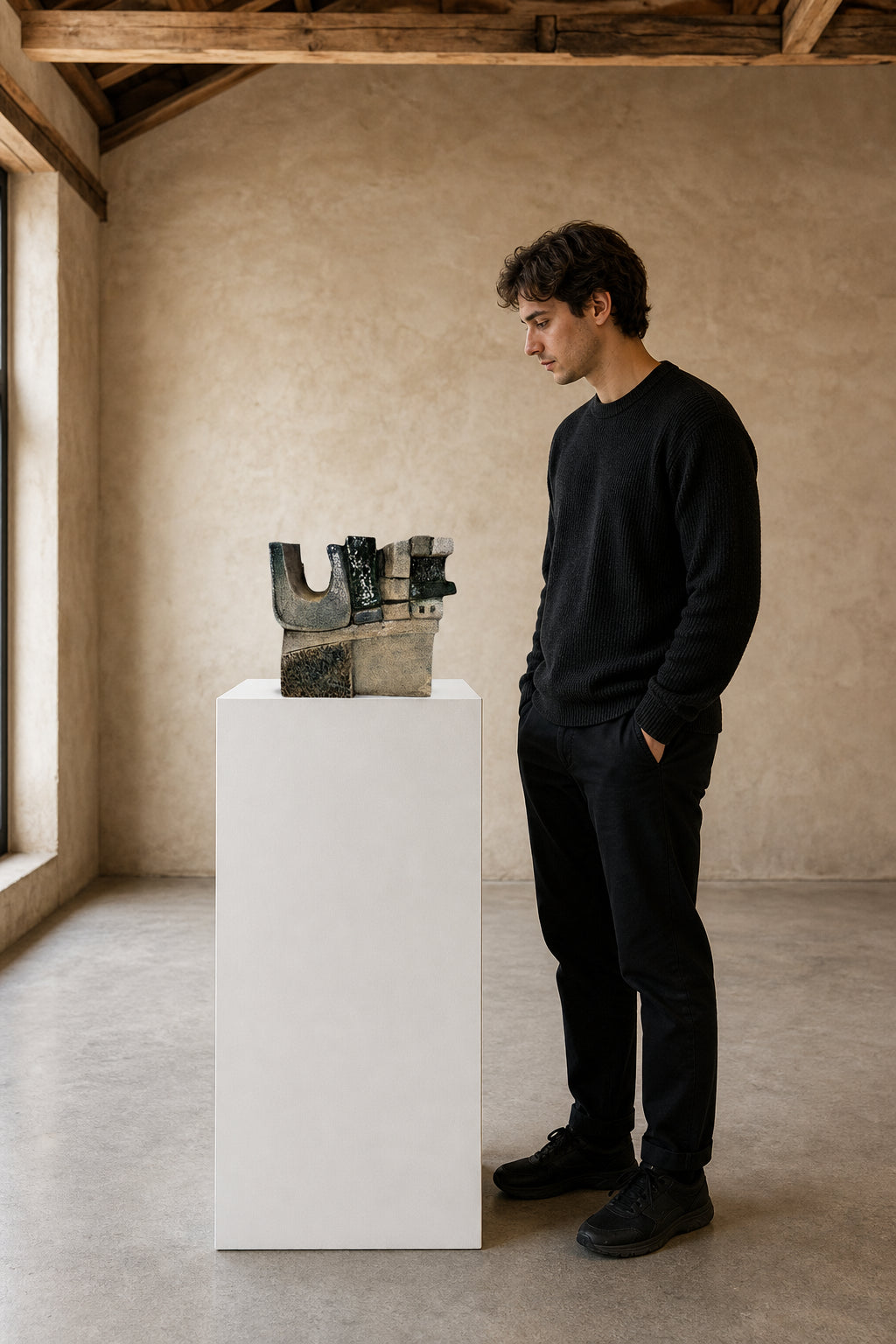
Abstract Geometric Ceramic Sculpture
Ceramic
25 × 25 × 7 cm | 9.8 × 9.8 × 2.8 in
About the price estimate
The price shown is an estimated range based on the work's medium, year, edition status, and current market context. It is not the final sale price.
Once you submit an inquiry, an Artsamy specialist will confirm the exact price for this piece alongside shipping, insurance, and any other costs. The final figure may fall within the estimate, slightly below for first-time buyers or aged listings, or occasionally above for highly contested works.
If you believe the estimated range is inaccurate, or you'd like to discuss the valuation directly, contact us and a specialist will respond within six hours during business days.
Shipping & taxes
Ships from Amman, Jordan. Hand-packed in a custom crate or rigid art-tube depending on medium and size.
Delivery (after handling): 5–10 business days within MENA, 10–18 to Europe and North America, 14–25 elsewhere. Larger or framed works ship via fine-art freight; timing confirmed by email after purchase.
Duties & taxes are excluded from the price. International buyers are responsible for any customs fees on arrival. Full export documentation provided.
Works leaving Jordan require an export clearance certificate, arranged on your behalf.
Need a quote first? Contact us with your delivery city.
The Artsamy guarantee
- Secure checkout. Payments are encrypted and processed by Shopify Payments.
- Authenticity guaranteed. Every artwork ships with a signed Certificate of Authenticity, verified by the artist or their estate.
- Money-back guarantee. 14-day return window if the artwork doesn't match its listing or arrives damaged in transit.
- Learn more about the Artsamy guarantee →
Choose options
About the work
This ceramic sculpture presents an assemblage of angular and curved geometric forms, their surfaces layered with rough matte textures and dark green-black glazes that evoke ancient stone architecture. The interplay of shadow and light across its stepped, blocky composition gives the piece a rugged, monumental quality despite its intimate scale.
Haydar Abd Al Raouf (Iraq, 1964–present).
Ceramic, 25 × 25 cm.
Part of the permanent collection of the Hindiyeh Museum of Arts, Jordan. One of a kind.
- Medium
- Size
- 25 × 25 × 7 cm | 9.8 × 9.8 × 2.8 in
- Rarity
- Unique
- Certificate of authenticity
- Included
- Genre
- Colours
- Grey, Green, Black and White
- Location
- Amman, Jordan
- Notes
- 1964-